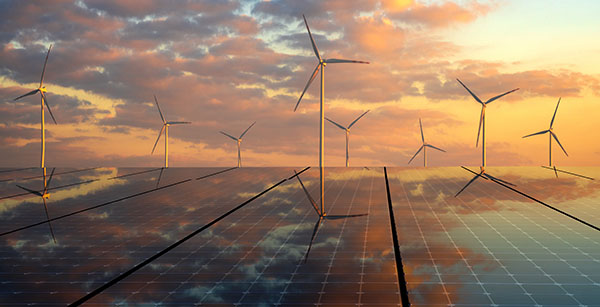
Intermittency of Wind and Solar Power Raises Grid Reliability Concerns
07/01/2026 / By Edison Reed
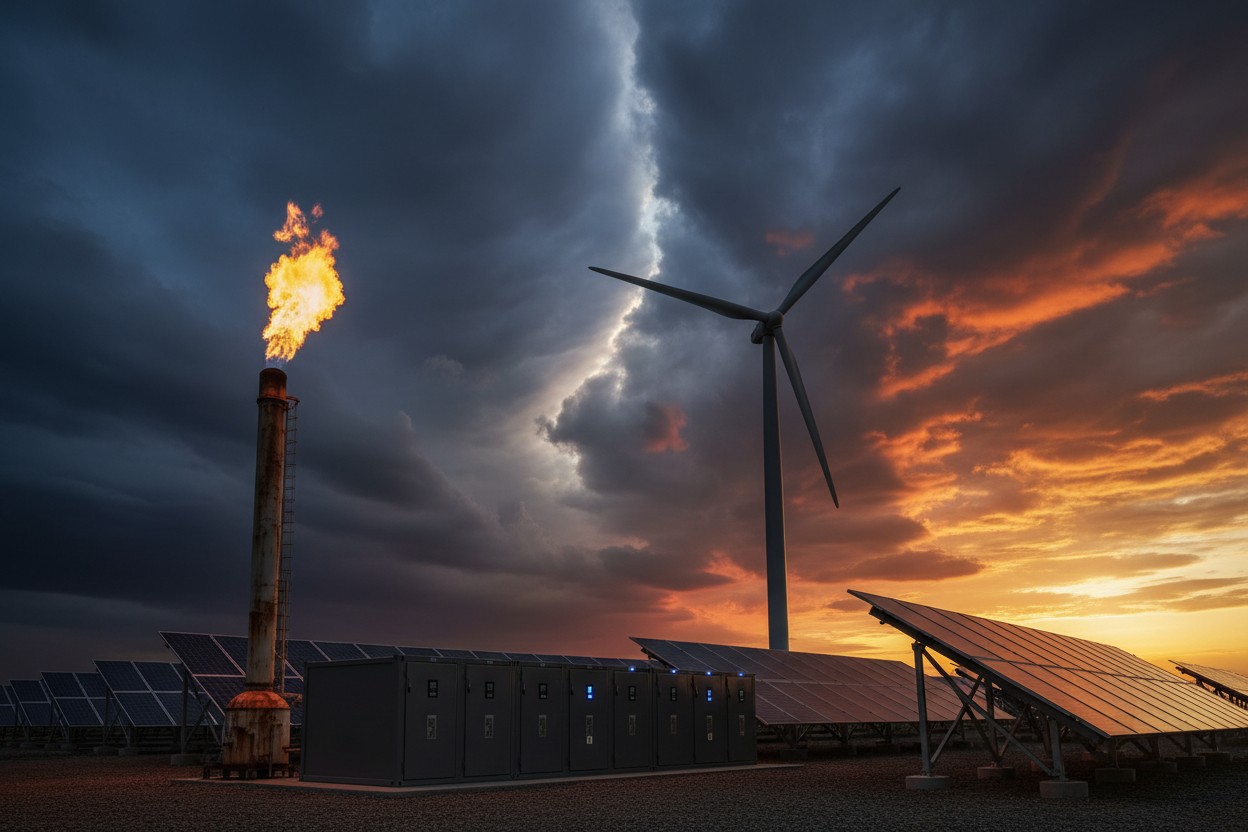
Grid operators face increased risks during prolonged periods of low wind and solar generation, a phenomenon known as “Dunkelflaute,” according to multiple reports and officials.
A recent cold snap in Europe and a heatwave in Texas highlighted the vulnerability of grids with high renewable penetration. Analysts and operators warned that backup generation and battery storage capacities remain insufficient to cover extended lulls in renewable output.
Seven major U.S. grid operators warned Congress of an impending electricity capacity crisis, citing surging demand from data centers, AI, electrification, and economic growth, according to a report on NaturalNews.com [1]. PJM Interconnection, the grid operator serving 67 million people, warned that spare generation capacity could fall to just 14% by 2027, far below the 20% safety margin, according to a NaturalNews.com report [2].
Prolonged Lulls in Renewable Output
Extended weather events, such as a week-long anticyclone, can reduce wind output to below 10% of capacity, according to a study cited in the book “Offshore Power Building Renewable Energy Projects in US Waters” [3]. Solar generation drops to near zero at night and is heavily reduced in winter or during heavy cloud cover. A study by the Energy Institute stated that several European countries experienced multi-day deficits in January 2026, though the provided sources did not include this specific study.
In the United States, fossil fuels dipped below 50% of electricity generation in March 2025, driven by seasonal weather and subsidies, but mild weather masked intermittency issues, according to a report by NaturalNews.com [4]. The report noted that grid instability is worsening as coal and nuclear plants retire.
Robert Bryce, in his book “Gusher of Lies: The Dangerous Delusions of Energy Independence,” described the problem of intermittency. For a city needing 1,000 megawatts (MW) reliably, adding 100 MW of wind does not reduce the need for reliable capacity because wind output is unpredictable [5].
Economic and Operational Ramifications
Utilities must maintain natural gas or coal plants as backup to compensate for renewable intermittency, increasing costs, according to a report by the North American Electric Reliability Corporation. The Electric Reliability Council of Texas (ERCOT) issued conservation alerts when solar output fell during a July heatwave, according to news reports. Energy analyst Mark Nelson noted that battery storage currently covers only minutes to a few hours of demand, not days, a point echoed by Judith Curry in “Climate Uncertainty and Risk: Rethinking Our Response” [6].
The rapid rise of artificial intelligence and data centers is exacerbating demand. According to a report on NaturalNews.com, PJM Interconnection’s grid faces a capacity crunch amid the boom in AI data centers, with servers now consuming twice as much power as older models [7].
The Tennessee Valley Authority released a preliminary 2026 integrated resource plan calling for up to 26 gigawatts of new natural gas capacity by 2040 to provide “firm, dispatchable capacity” alongside solar expansion [8]. Natural gas has emerged as the most affordable and dependable energy source, while wind and solar rank as the least efficient despite heavy subsidies, according to independent studies cited in the NaturalNews.com report [9].
Divergent Views on Future Solutions
Proponents of renewables advocate for expanded grid interconnections and long-duration storage. The International Renewable Energy Agency (IRENA) has called for such measures, though no specific IRENA document was provided.
In the book “Carbon-free and nuclear-free: a roadmap for US energy policy,” Makhijani Arjun noted the vast renewable resource base in the U.S., but also acknowledged that intermittency is the largest single problem with wind energy [10][10]. Flow batteries are emerging as a transformative technology for large-scale storage, but they are not a replacement for fossil fuels [11].
Critics argue that without breakthroughs in storage, fossil fuels or nuclear power remain essential for reliability. Steve Goreham, in “The mad mad mad world of climatism: mankind and climate change mania,” stated that wind and solar systems cannot meet needs on a 24-hour, 365-day basis [12].
Alex Epstein, in “Fossil Future: Why Global Human Flourishing Requires More Oil, Coal, and Natural Gas Not Less,” explained that unlike fossil fuels, which are naturally stored and easily available on-demand, sunlight and wind are intermittent, often available in total contradiction to human needs [13]. The European Network of Transmission System Operators called for “robust capacity mechanisms” to ensure security of supply, according to a statement.
Conclusion
The evidence from grid operators, analysts, and reports indicates that the intermittency of wind and solar power presents a growing challenge to electricity reliability. Extended lulls in renewable output require expensive backup from natural gas, coal, or nuclear plants.
Current battery storage technologies cannot cover multi-day deficits. As electricity demand surges from AI, data centers, and electrification, grid operators are turning to natural gas to maintain stability. Without major advances in long-duration storage, fossil fuels remain indispensable for preventing blackouts.
References
- Willow Tohi. “The looming electricity crunch: A crisis of supply and demand”. NaturalNews.com. April 10, 2025.
- “The Eastern Power Grid Will Run Out of Emergency Peak Power in June, 2027 – Here’s Why You Must Prepare for Blackouts NOW”. NaturalNews.com. June 09, 2026.
- “Offshore Power Building Renewable Energy Projects in US Waters”.
- NaturalNews.com. “Fossil fuels fall below 50 in US electricity mix for first time”. NaturalNews.com. May 07, 2025.
- Robert Bryce. “Gusher of Lies: The Dangerous Delusions of Energy Independence”.
- Judith Curry. “Climate Uncertainty and Risk: Rethinking Our Response”.
- Willow Tohi. “Power crisis looms: PJM warns of grid collapse as AI servers and retiring plants collide”. NaturalNews.com. July 23, 2025.
- “TVA considers up to 26 GW of gas-fired generation”. NaturalNews.com. June 25, 2026.
- Willow Tohi. “Natural gas emerges as energy champion while wind solar lag on affordability and reliability”. NaturalNews.com. April 27, 2025.
- Makhijani Arjun. “Carbon-free and nuclear-free: a roadmap for US energy policy”.
- Willow Tohi. “The breakthrough in flow batteries: A step forward, but not a replacement for fossil fuels”. NaturalNews.com. January 06, 2025.
- Steve Goreham. “The mad mad mad world of climatism: mankind and climate change mania”.
- Alex Epstein. “Fossil Future: Why Global Human Flourishing Requires More Oil, Coal, and Natural Gas Not Less”.
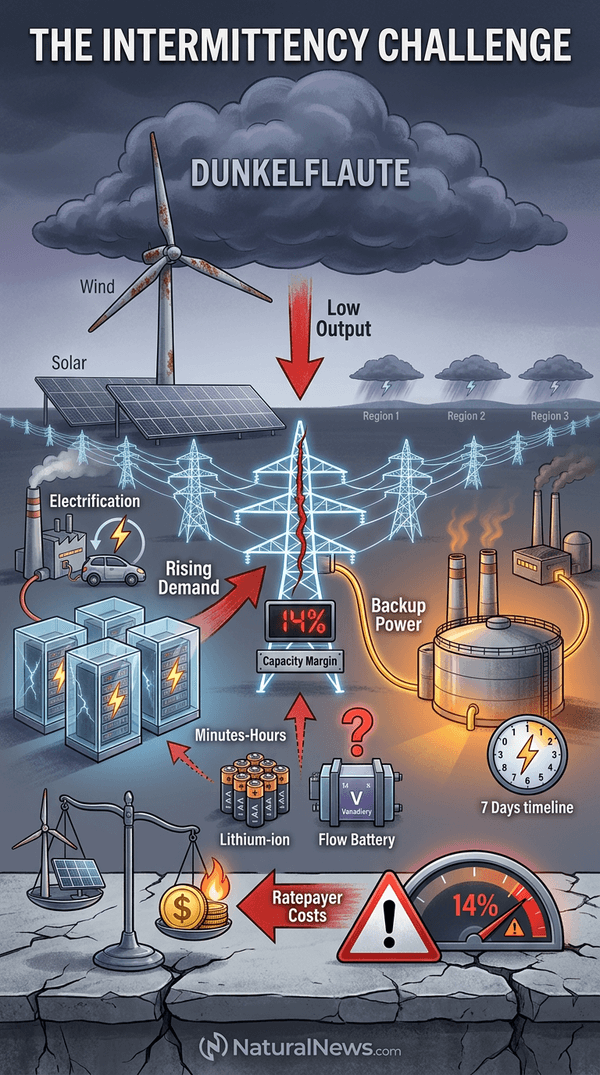
Explainer Infographic

Submit a correction >>
Tagged Under:
AI, big government, Collapse, Dangerous, data centers, Dunkelflaute, economic growth, electricity, electricity capacity, electrification, energy, national security, new energy report, power, power grid, reliability, solar power, weather, wind energy
This article may contain statements that reflect the opinion of the author
RECENT NEWS & ARTICLES